A first automation should not be the most impressive process you can imagine. Choose a task with predictable inputs, a clear output, and a manageable consequence if something fails. Creating an internal draft task is usually easier to supervise than automatically sending a final quote to a customer.
Look for repeated work that already has a stable manual procedure. If people disagree about what should happen, resolve that disagreement first. Software cannot supply a reliable business rule where none exists.
Choose an output you can inspect
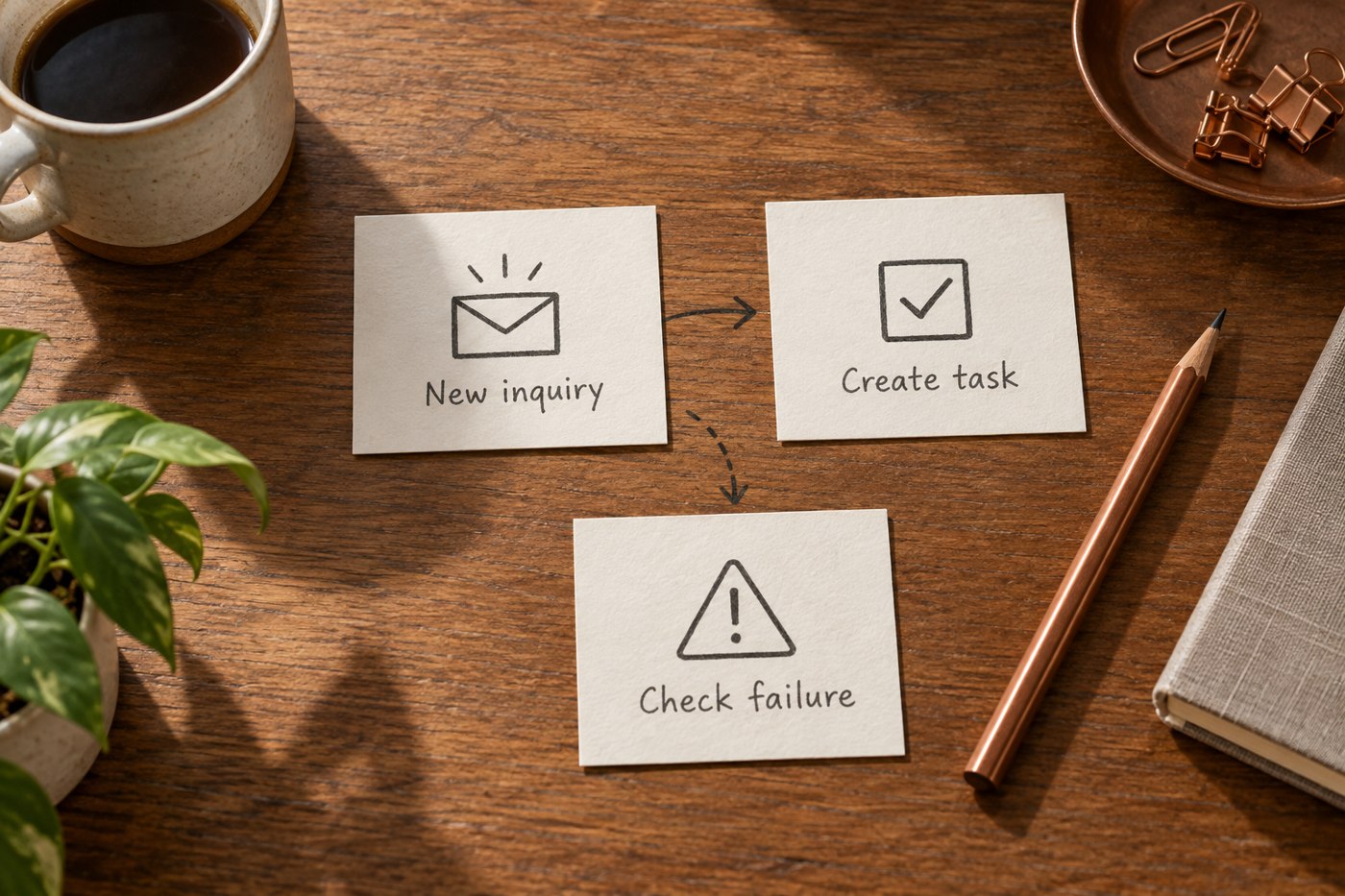
Suppose an approved inquiry should create a kickoff task. The automation can copy the project identifier, assign an owner, and add a link to the approved brief. A person can check the resulting task before acting on it.
Avoid adding several external actions to the first version. Sending emails, changing account permissions, and taking payments introduce different risks and recovery needs. Expand only after the basic process is understood and verified.
Define what counts as a duplicate. If the same approval event arrives twice, should the system update one task or create another? Use a stable record identifier and the tools' supported duplicate-handling methods rather than relying on a person's name alone.
Write the failure path first
Decide who receives an error alert and what information it contains. Include the affected record and failed step without exposing unnecessary private data. A generic “automation failed” message gives the operator little help.
Provide a manual fallback. The responsible person should be able to finish the task safely and record that they have done so. Otherwise a later retry may repeat the manual work. Keep an explicit completed or reconciled state where the system supports it.
Set a review period for the initial runs. Compare inputs with outputs and investigate missing or duplicate items. Do not assume an automation is healthy simply because its dashboard shows no recent error; a missing trigger may produce no run at all.
Keep ownership after launch
Record which accounts and connections the automation uses, who can change it, and how to pause it. Avoid placing critical access under a departing contractor's personal account. Review permissions and credentials according to the connected services' supported practices.
After the pilot, measure the time saved alongside the time spent monitoring and correcting failures. A modest automation can be worthwhile if it is dependable and understandable. If every exception requires the original builder, simplify the design or keep the task manual until a clearer process is available.