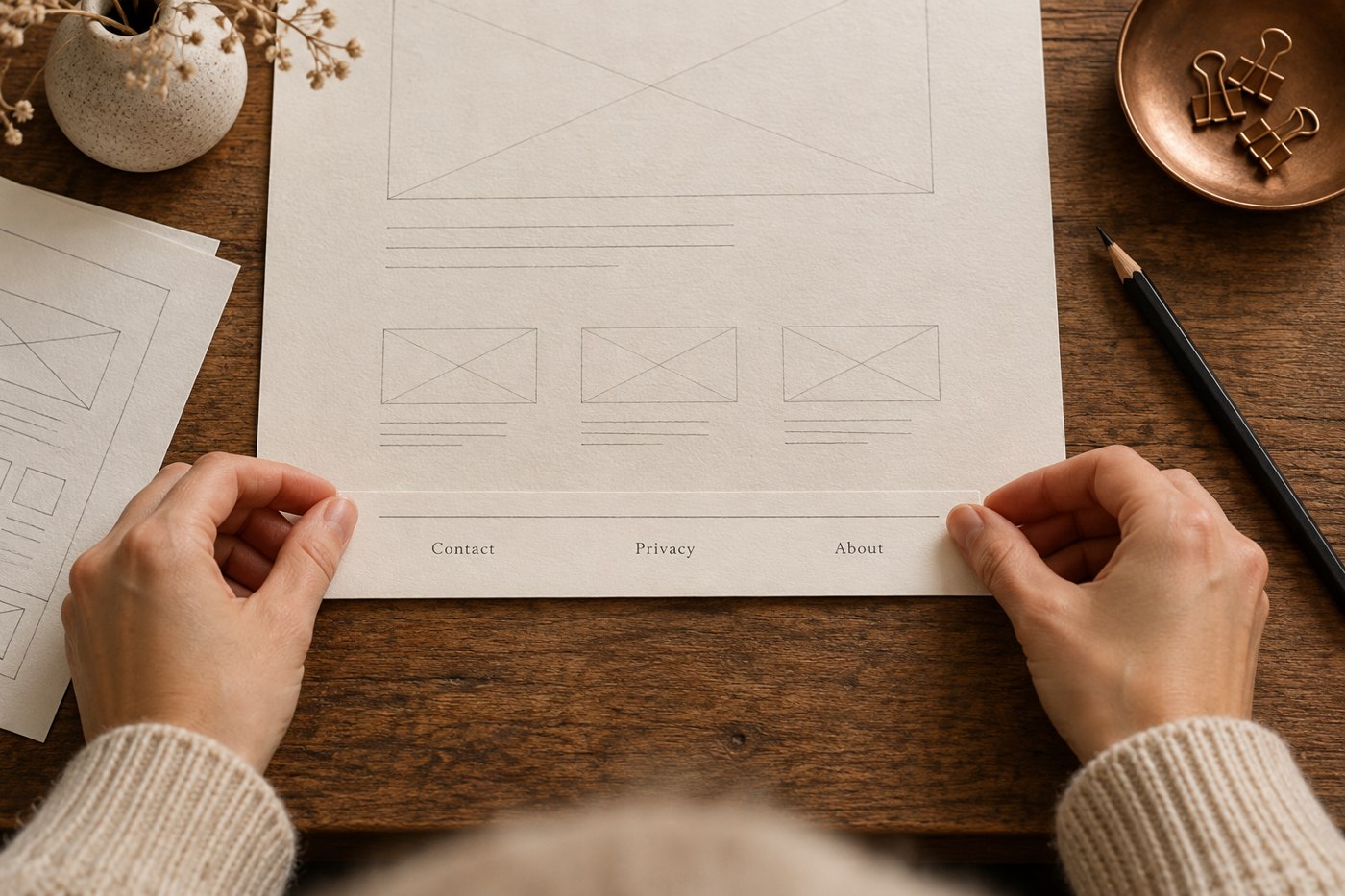
The footer is often where visitors look after reaching the end of a page. They may want contact information, a policy, or another route through the site. Treat it as a useful closing area rather than a place to put every link that did not fit above.
Start with the destinations people reasonably expect to find there. These commonly include contact and privacy information, alongside any other notices relevant to the business. The exact policy requirements depend on what the website does and whom it serves; a copied footer is not a compliance assessment.
Separate navigation from decoration
A small website may need only a short row of links and a copyright line. A larger store may benefit from groups such as Customer help and Company information. Use headings only when they make the groups easier to understand.
If a brand description adds context, keep it factual and short. Repeating the homepage slogan at the bottom of every page is not essential. Avoid filling space with unsupported labels such as “trusted leader” or a set of decorative badges with no meaningful basis.
Keep contact routes coherent
A contact-page link may be enough when that page contains the maintained email or phone details. Repeating those details in several places creates more opportunities for an outdated address to survive a change. If direct details are useful in the footer, make their maintenance responsibility explicit.
Only include social links for accounts that belong to the business and are worth visiting. Empty icons, unfinished newsletter forms, and inactive chat buttons weaken the footer's usefulness. Every visible control should lead to a real outcome.
Review the small-screen layout
Footer links often become too small or crowded because they are treated as secondary. Keep them readable and distinguishable on a phone. Align buttons and text links consistently within the same group, including any privacy controls that the site actually requires.
Check the copyright name and year for accuracy, and remember that this line does not replace an image's separate attribution requirements. The footer should not imply ownership of licensed material beyond the rights the business holds.
Finally, review the footer alongside the header. Some repetition helps people navigate, but two enormous copies of the menu rarely do. Keep the links that support a real end-of-page need and let the rest remain in the content areas where they make sense.