Every new database field creates a small obligation. Someone must collect it, understand it, update it, and protect it. Before adding a field because it might be useful someday, identify the decision or task it will support.
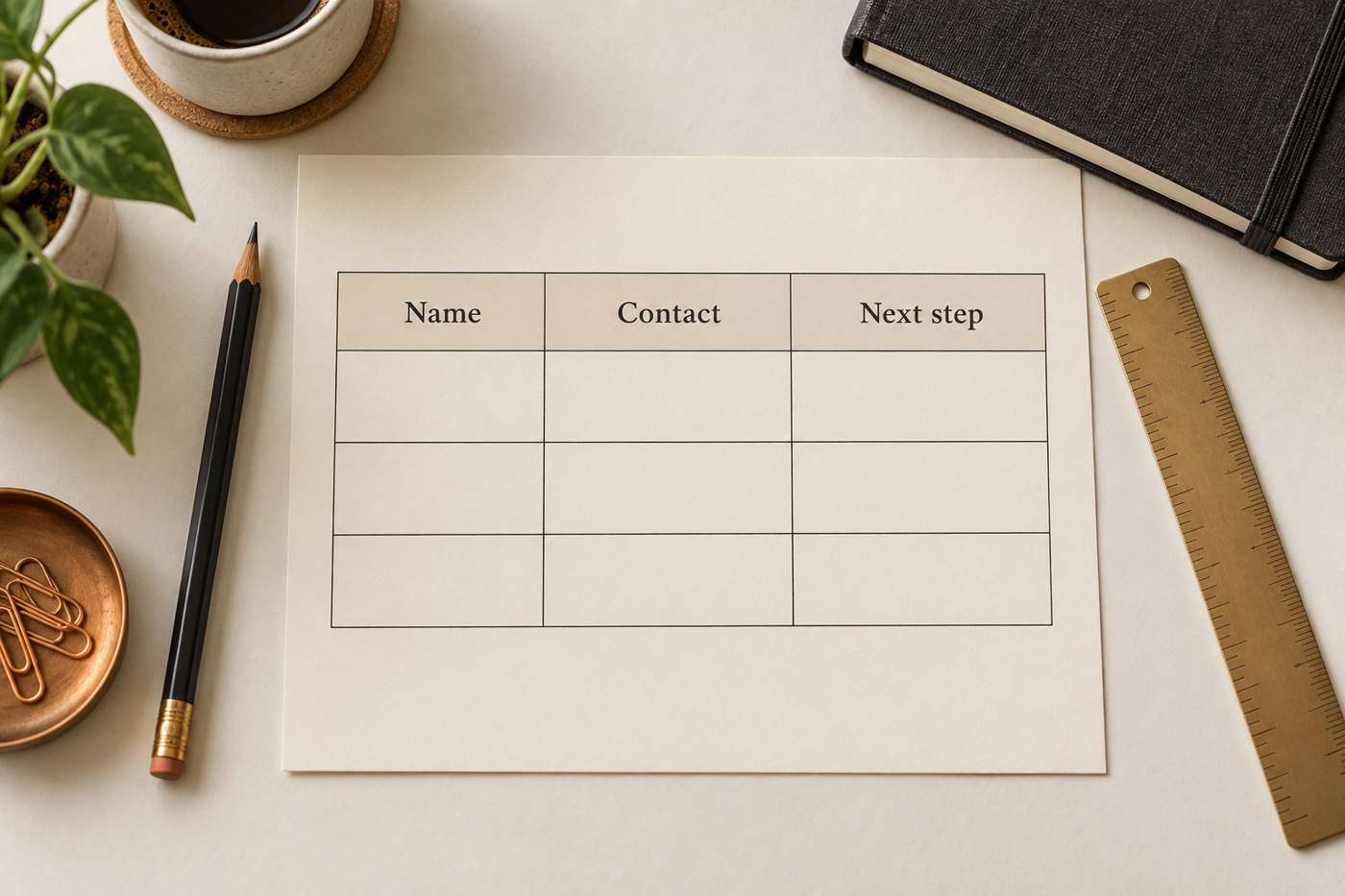
Begin with the minimum needed to handle the relationship: a suitable contact route, the relevant organization or household where appropriate, the inquiry or service, and the next action. Additional fields should earn their place through the actual workflow.
Make ambiguous values explicit
A field called “status” is incomplete without definitions. Does active mean a current customer, an open project, or a lead being contacted? Choose values that represent one concept. Separate a customer's relationship status from the stage of a particular job when those can differ.
For dates, explain what each date means. “Start date” might refer to the first inquiry, signed agreement, or scheduled delivery. A descriptive name prevents reports from comparing unlike events.
Use controlled choices when consistency matters, such as a defined service category. Leave a suitable free-text area for relevant context that cannot be predicted. Too many free-text fields make reporting difficult; too many rigid choices can force people into inaccurate answers.
Distinguish missing from not applicable
An unknown project date is not the same as a project with no scheduled date. Avoid invented placeholders that later look factual, such as entering January 1 simply to satisfy a required field. Allow an appropriate empty or unknown state and define when the information should be revisited.
Keep sensitive information out unless the business genuinely needs it and has suitable handling arrangements. A general customer database is not automatically an appropriate place for identity documents, financial credentials, or detailed personal circumstances.
Test the fields with several fictional examples, including a repeat customer, a canceled inquiry, and an organization with two contacts. Can the team enter each case without duplicating the person or misusing a field? Ask someone other than the designer to perform the test.
Document each important field's purpose, accepted values, and owner in a short reference. Review unused fields after the pilot. Removing a field that nobody uses can improve accuracy more than adding another report. A database becomes helpful when its entries have consistent meaning, not when every possible fact has a place to be stored.