Cards titled “Website,” “Marketing,” and “Customer follow-up” may describe areas of work, but they do not tell anyone what to do next. A useful project board breaks those areas into actions someone can finish and another person can verify.
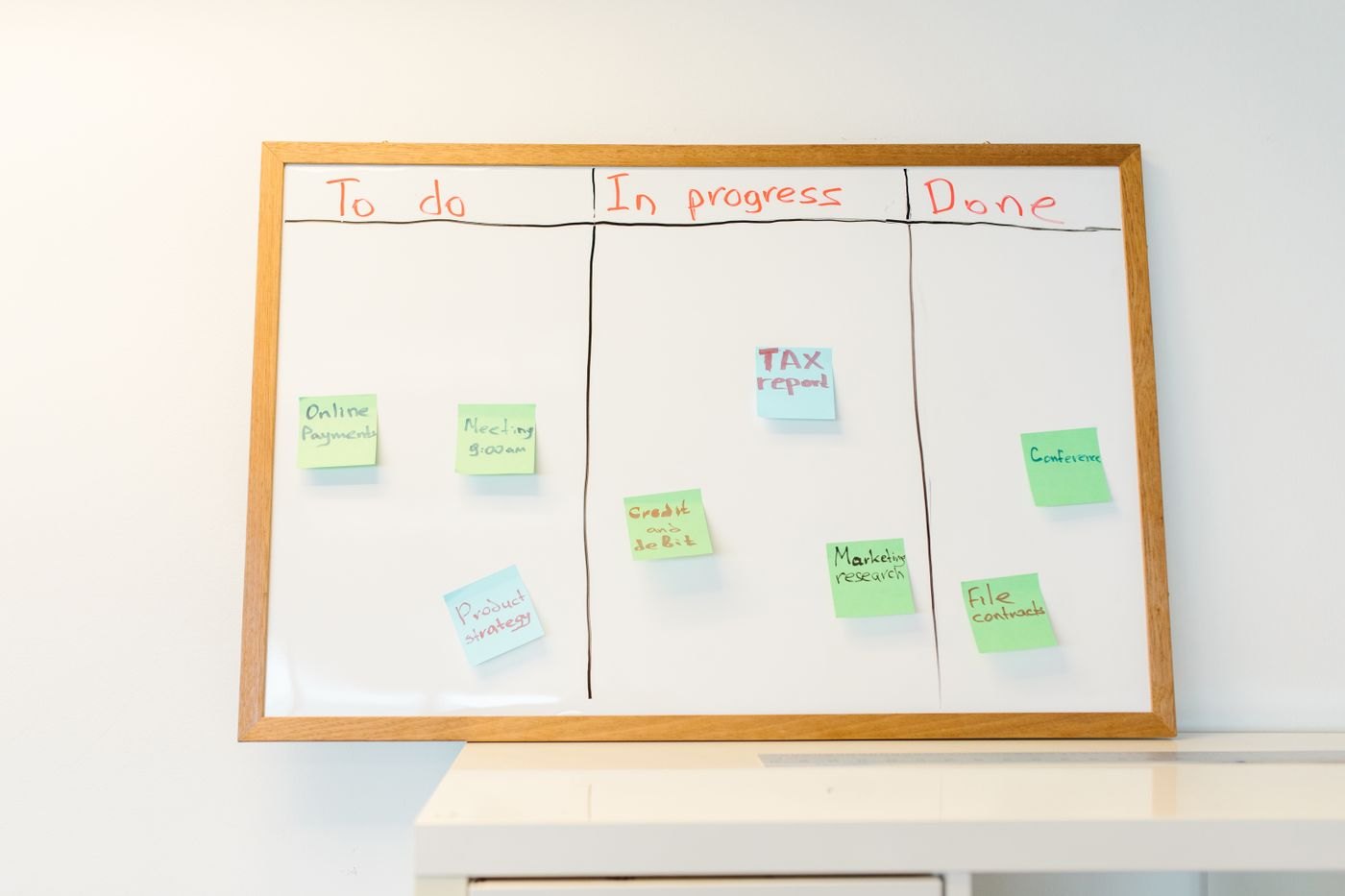
Choose columns that reflect real stages. For a small design project, ready, in progress, waiting for review, and complete may be enough. Add a separate blocked state only if the team will use it consistently; otherwise record the blocker visibly on the card.
Write a card that can move
“Draft the service-page introduction” is more actionable than “Service page.” Add an owner, the relevant brief or file, and a clear condition for completion. For example, the draft is ready for review when it includes the agreed service area and has been checked against the offer details.
Keep the task small enough that progress is meaningful. A card that stays in progress for six weeks may contain several tasks or depend on decisions nobody has recorded. Split it when doing so clarifies responsibility, not simply to increase the number of completed cards.
Use dates for real commitments. Assigning every task the same deadline does not show priority or sequence. Identify dependencies such as receiving product photographs before completing the catalog layout.
Explain waiting work
When a card is waiting, record who or what it is waiting for and when it will be checked again. “Waiting for client approval of the blue proof; follow up Friday” is useful. A waiting column with no explanation becomes a parking lot for forgotten work.
Keep active work limited to what the team can genuinely handle. If everyone has fifteen cards in progress, the board may be showing intentions rather than current work. Move unstarted tasks back to a ready queue and choose deliberately.
Review the board briefly at a regular interval. Focus on what can move, what is blocked, and what needs a decision. Do not turn the review into reading every card aloud when the information is already visible.
Archive completed work in a way that preserves needed records and decisions. Use the board's history to understand recurring delays, but avoid treating card counts as a complete measure of individual productivity. Tasks differ in difficulty and value. The board should help the team deliver the project, not encourage people to create smaller cards merely to look busy.