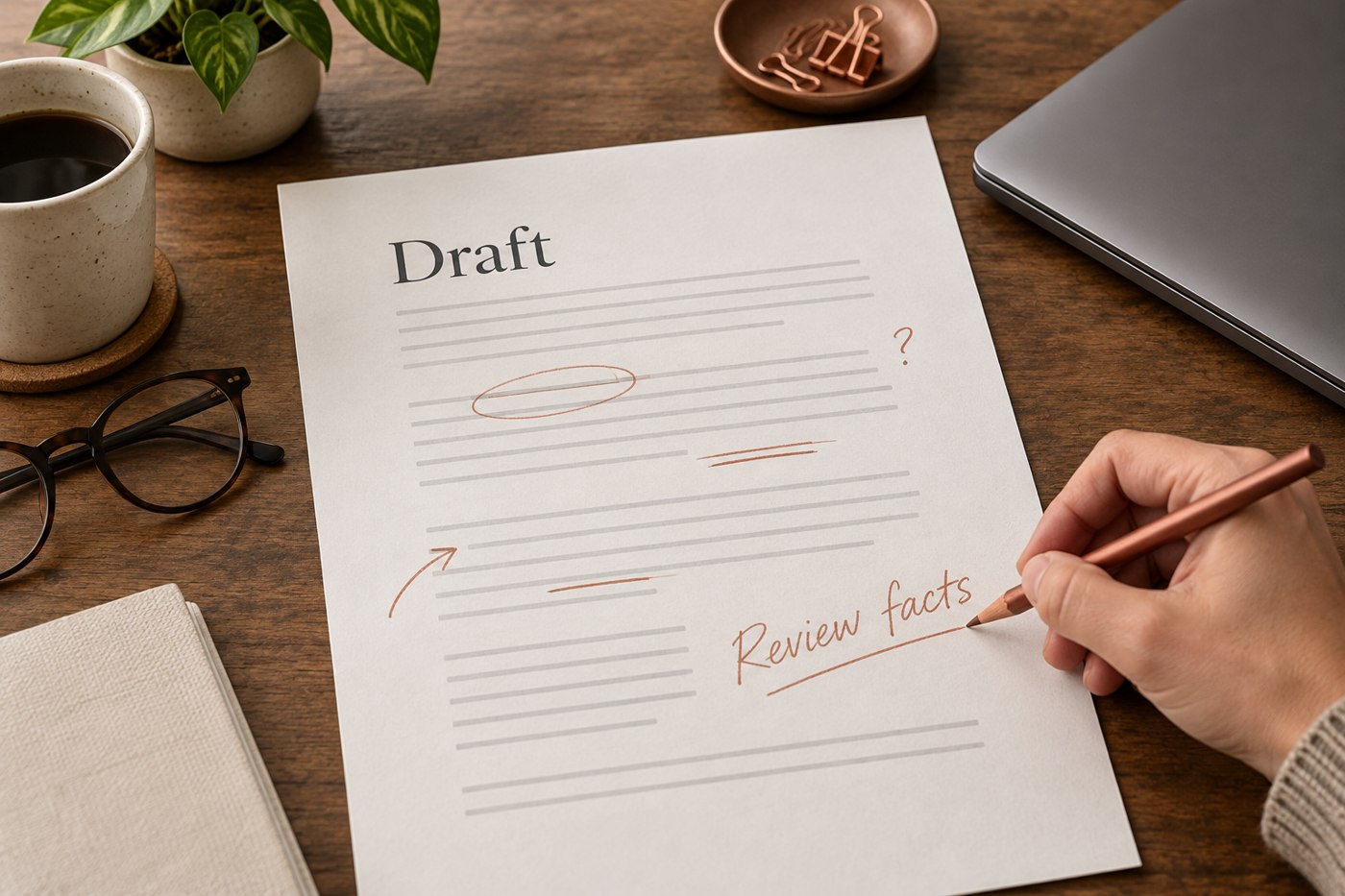
An AI-generated paragraph can sound finished before its facts have been checked. That fluency is useful for drafting, but it is not evidence that the text is accurate or appropriate for the business. Give the output a clear place in the workflow: draft, review, approval, then publication or sending.
NIST's generative-AI risk profile identifies risks including confidently presented false information and privacy exposure. The review should address those risks through the actual task rather than adding a vague instruction to “be careful.”
Give the draft a bounded assignment
Provide approved facts, the intended audience, the purpose, and the limits. For a service announcement, these might include the actual service area, launch date, booking process, and statements the business must not make. Ask the tool to flag missing information instead of inventing it.
Use synthetic or appropriately sanitized examples when possible. Do not paste confidential customer records, credentials, or unpublished commercial material into a tool without an approved basis and suitable handling arrangements. Check the service's current data settings and terms for the account being used.
Review in separate passes
First check facts and commitments. Verify dates, names, product features, prices, links, and any claimed results against reliable source material. Open cited sources and confirm they support the statement; a convincing-looking citation may be wrong or nonexistent.
Then check the offer. Has the draft added a guarantee, a deadline, a free service, or a qualification the business does not provide? Has it softened an important limitation until readers could misunderstand it? Compare the output with the approved brief rather than assuming the model followed every instruction.
Next review the language as a customer would. Remove vague praise, repeated explanations, and sentences that sound confident without saying much. Preserve concrete details that help the reader act. Do not invent first-person experience, customer quotations, or a team identity to make the draft feel more human.
Finally inspect privacy and context. A summary may reveal more about a customer than the final message needs, even when individual names have been removed. Check whether remaining details could identify the person or expose confidential information.
Make approval visible
Assign a reviewer with enough subject knowledge and authority for the content. High-stakes legal, financial, health, or safety statements need appropriate expertise rather than a general copyedit. If the business cannot verify a claim, remove it or seek the necessary review.
Keep a record of the approved version and the information used to check it. Avoid connecting raw generated text directly to customer-facing publication unless the workflow has suitable controls for the specific use.
For recurring tasks, save examples of corrections. If drafts repeatedly invent delivery times, strengthen the input brief and add a specific review check. The value is not eliminating human work at any cost; it is shifting time from blank-page writing toward informed editing while keeping responsibility with the business.