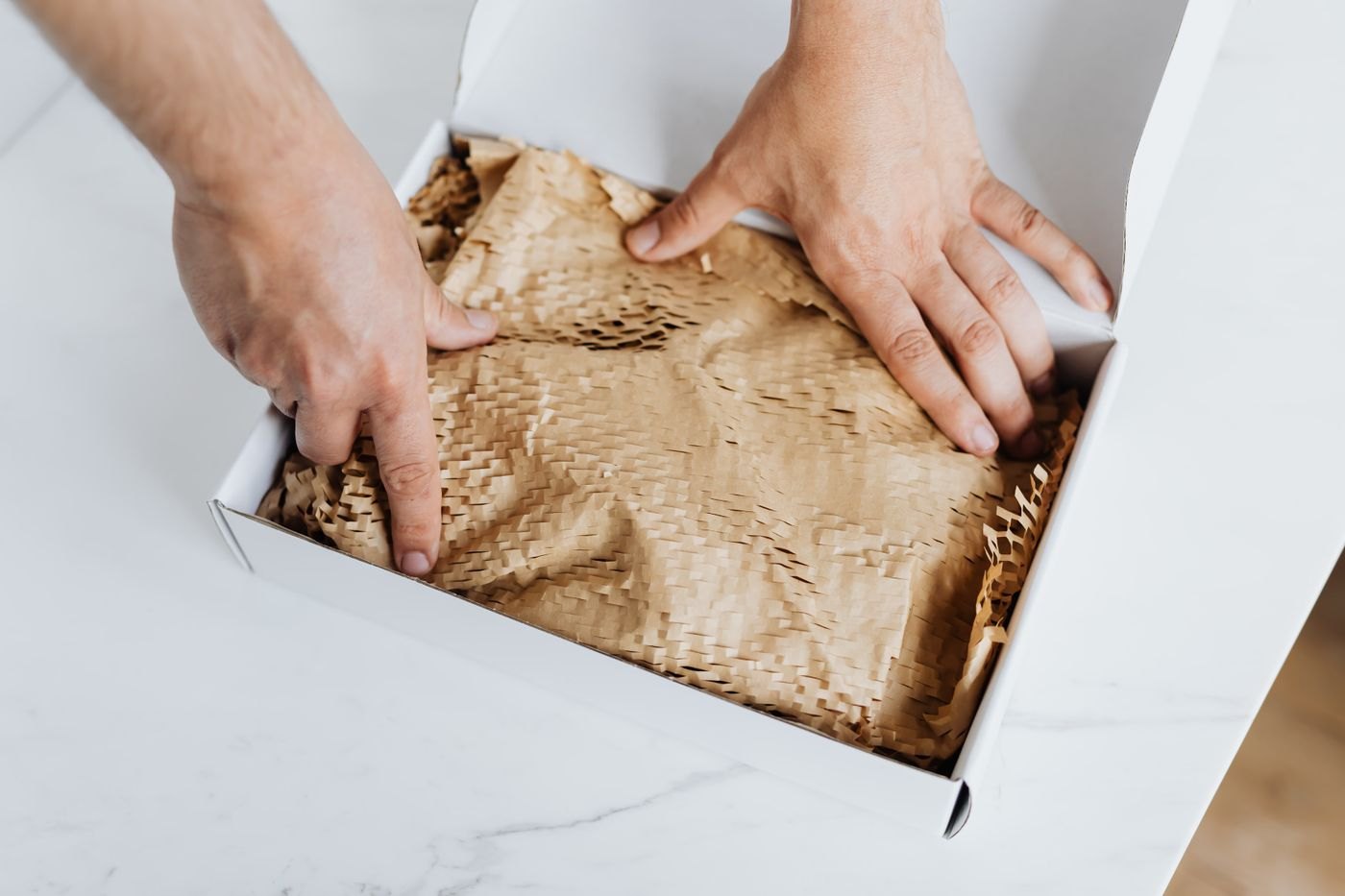
The smallest box is not necessarily the cheapest package to send successfully. A tight fit may leave a fragile corner unprotected, while an oversized box creates empty space, extra filling, and potentially higher shipping costs. Packaging should be tested around the finished parcel, not selected from the dimensions of the item alone.
Put together a representative order with every component: product, accessories, inner protection, paperwork, and outer packaging. Weigh and measure that packed parcel. USPS guidance calls for appropriate packaging and accurate parcel measurements; reused boxes also need conflicting old labels removed. Check the selected carrier's current service requirements before standardizing a package.
Think about movement inside the box
A ceramic cup can look secure from above yet strike the side when the parcel turns. Consider the handle, rim, and any point where the object can move into a harder surface. Separate items that could damage one another. A decorative retail sleeve may present the product well without providing enough protection for shipping.
Try packing and unpacking a sample several times. Ask someone unfamiliar with the method to follow the written instruction. If the result depends on one experienced packer's intuition, add a photograph or clarify the amount and placement of protection. Keep informal trials separate from any claim that packaging has passed a recognized transport test.
Compare two plausible configurations with the same order. Record packed dimensions, material cost, packing time, and how easy the recipient finds the opening process. Avoid chasing a few cents in material savings while adding several minutes of awkward assembly to every order.
Allow for combinations
A store selling notebooks and mugs may need a different package for a mixed order than for either item alone. Work through common combinations before buying a large quantity of one box. Keep the number of standard sizes manageable, but do not force every combination into a package that fits badly.
Restricted or hazardous goods need their own review. Batteries, liquids, and certain other products can have transport, labeling, or packaging requirements beyond ordinary parcel advice. Use the carrier's current instructions for the actual item and route; a strong box alone does not make a shipment acceptable.
After real orders begin, connect damage reports to packaging versions. Record the item, pack configuration, and where damage occurred, then look for a pattern. A replacement expense tells you a parcel failed; photographs and configuration records help identify what to change. Retest the revised pack before making it the new default.