A useful first client conversation does not need to produce an instant solution. It needs to establish what is happening, why the person wants help and whether you are the right person to take the next step. Going into the call with that purpose can make it feel less like a performance.
Read the inquiry and the material the prospect has already shared. Note the business name, the requested work and any date they mentioned. If they linked a website, look at the relevant pages rather than preparing a full unsolicited audit. Write down what you still do not understand. Repeating questions they answered in the inquiry makes the preparation invisible.
Find the reason behind the request
“We need a new website” might mean that the existing one is difficult to update, that inquiries are going to the wrong person or that the business now serves a different audience. Ask what prompted the request and what happens today. A concrete example is often more informative than a list of preferred features.
For instance, a consultant may describe spending every Friday correcting booking details by email. That points toward a booking process and the information collected before a meeting. It does not yet establish that the whole website needs replacing. You can acknowledge the problem without committing to a particular implementation during the call.
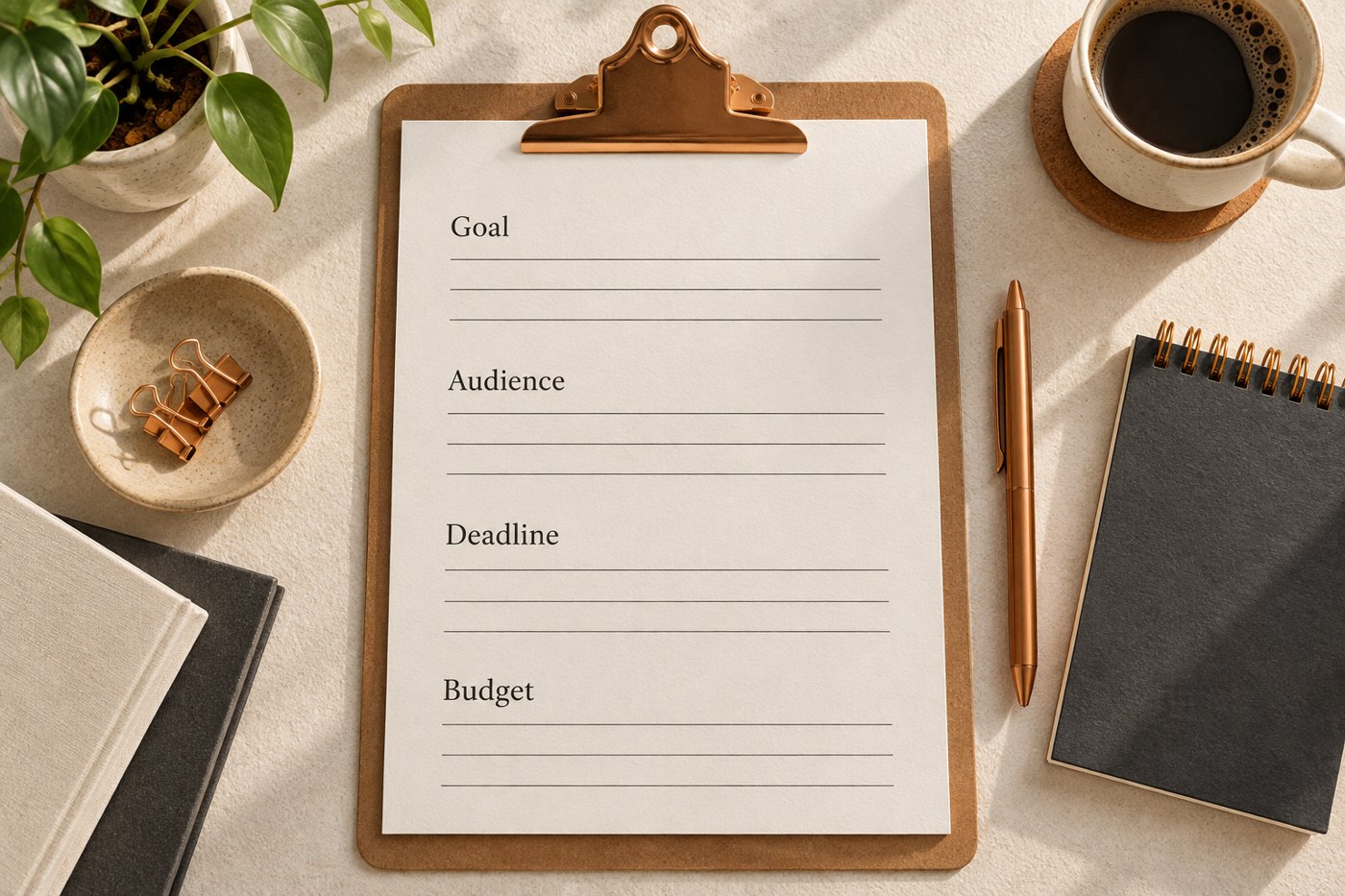
Ask who will use the work, who will provide materials and who can approve a decision. A project with one owner has a different review process from one involving several partners. Clarify whether the person on the call is gathering options or is ready to commission the work.
Discuss the constraints openly
Talk about the desired schedule and why that date matters. A public launch, a lease ending and a personal preference create different constraints. Ask about the available budget or the range they are considering, explaining that it helps you judge what scale of work is realistic. Do not use the conversation to promise a scope before you have enough information to price it.
Be direct about the services you provide. If the request depends on skills or availability you do not have, say so. A short discovery call should not turn into a long technical workshop simply because it is uncomfortable to admit that the fit is poor.
Leave time for the prospect's questions. They may need to understand how communication, approvals or handover work before discussing finer details. Give a representative explanation of your process rather than presenting a rigid sequence that every project must follow.
Before ending, summarize the need in your own words and invite a correction. Agree one next action: a written brief, a paid discovery stage, a proposal or a decision not to proceed. Name who is doing it and when to expect it. Send a concise follow-up while the discussion is fresh, separating confirmed points from assumptions still to check.